The Lanes Brighton: What To Do, Where They Are And How To Reach Them
Get lost on purpose in Brighton's oldest quarter, a knot of jewellers' alleys and pub-lined twittens that reward a wrong turn.
 Written with Oliver Bennett, Brighton bus tour guide & local sightseeing specialist
Short answer
The Lanes are Brighton's oldest quarter, a maze of narrow twisting alleys, or twittens, near the seafront known for jewellers, antique shops, cafes and old pubs. Do not confuse them with North Laine, the wider bohemian streets inland. The open-top bus reaches them from Stop 7 at the Jubilee Clock Tower, a few minutes' walk away.
There is a moment, three turns into The Lanes, when you lose your bearings completely and stop minding. The alleys are barely wide enough for two people to pass, the buildings lean in, and every few steps a jeweller's window or a low pub door pulls you sideways. This is the oldest part of Brighton, the fishing town that everything else grew around, and the best way to see it is to give up on a straight line. Here is what to look for, where it is, and how the difference between The Lanes and North Laine trips up almost every first-time visitor.
You can follow this guide independently. If you want the route, admission or local context arranged, compare the best-fit bookable option after the practical answer.
Booking Choice: The strongest paid match is explore on foot with a guide: it answers the main planning decision in this guide while the original article keeps the independent route usable. Explore The Brighton story - walking tour
What Are The Lanes In Brighton?
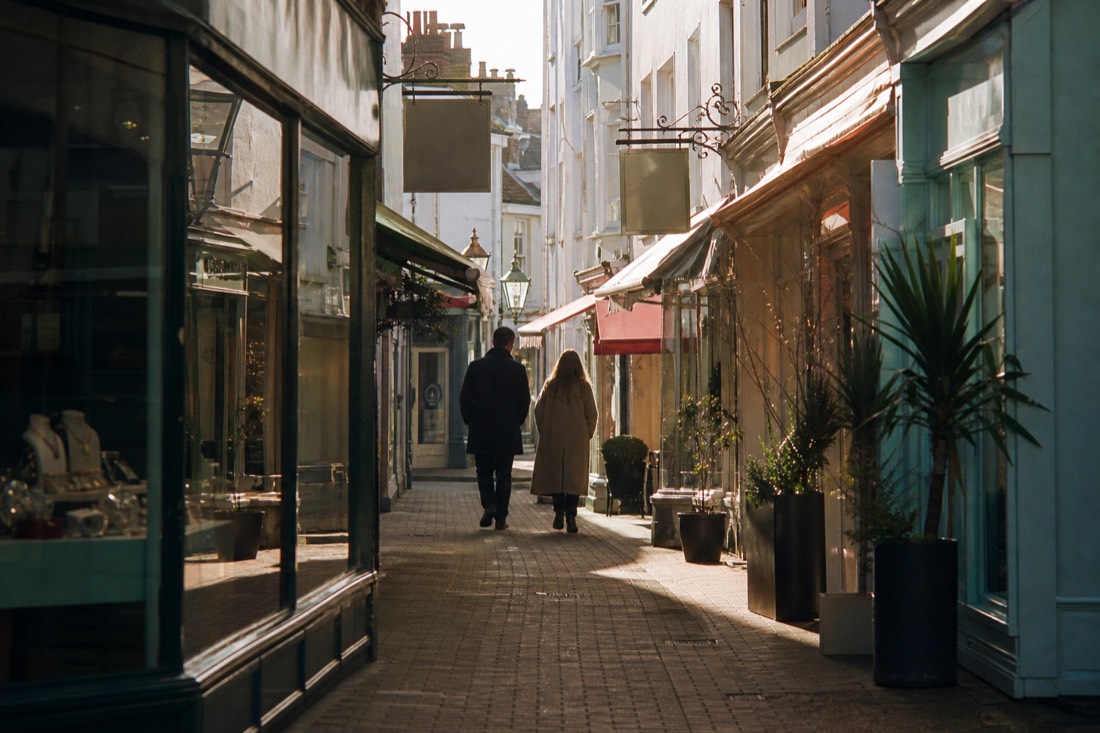
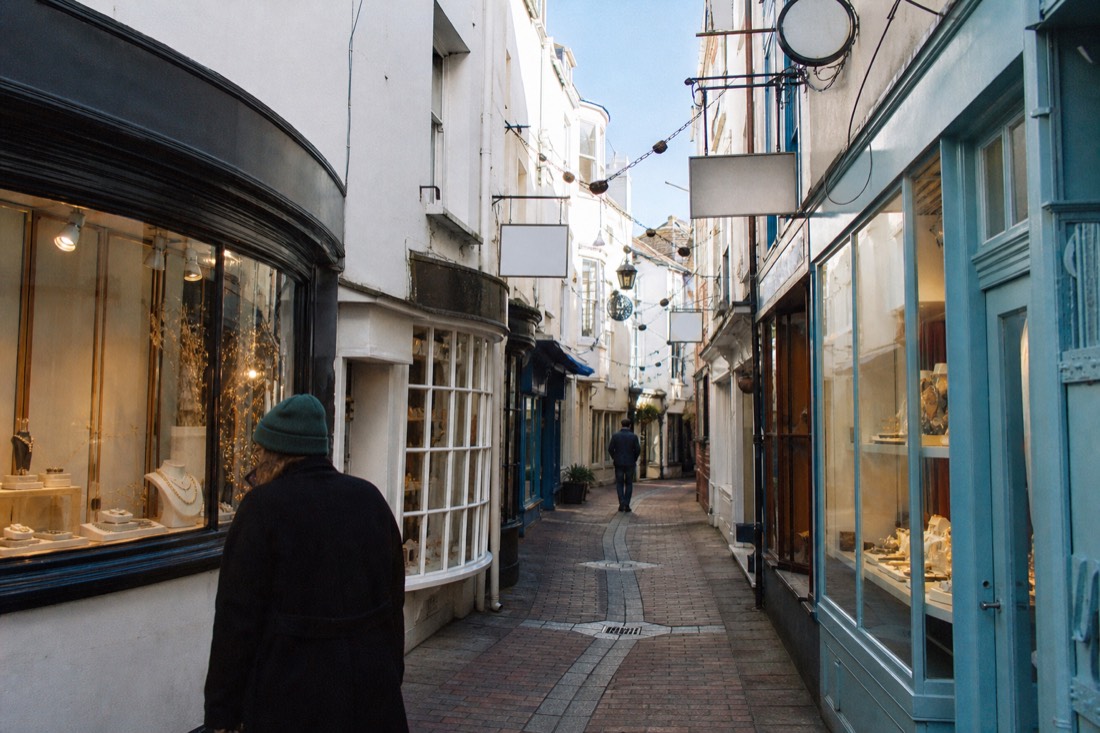
The Lanes are Brighton's oldest quarter, a dense maze of narrow, twisting alleys just back from the seafront. Once the heart of the old fishing town of Brighthelmstone, they are now known for jewellers, antique dealers, independent shops, cafes and historic pubs. The narrow passages between them are known locally as twittens, and getting lost in them is the point.
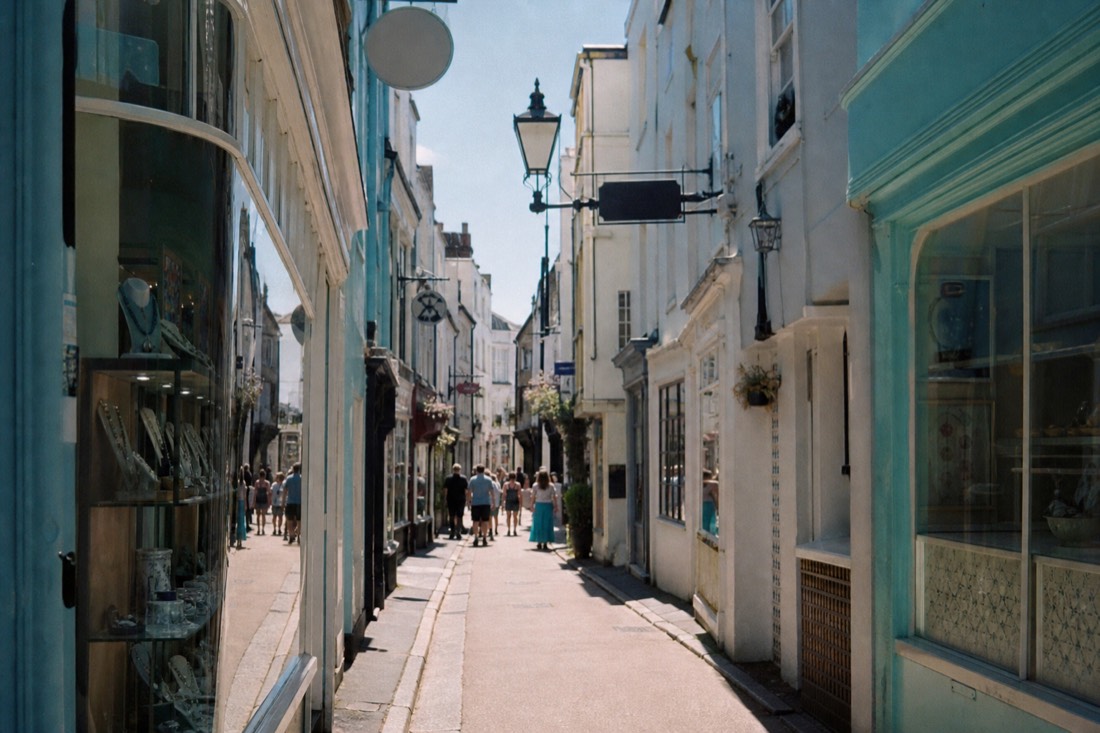
The Lanes follow the footprint of the medieval town, which is why they feel so unlike the rest of Brighton. The streets were laid before carriages, let alone cars, so they twist and narrow and open into tiny squares without warning. Names like Meeting House Lane and Ship Street carry the history plainly enough. For centuries this was where fishermen lived and traded; today the same tight buildings hold jewellery specialists, vintage sellers, small galleries and some of the town's oldest pubs.
Jewellery is the trade the area is most associated with. Several long-standing jewellers cluster here, dealing in antique and bespoke pieces, and it remains a genuine destination for engagement rings and older stones rather than a themed shopping street. Between the shopfronts you find coffee stops, wine bars and restaurants tucked into spaces you would walk past twice.
What Is The Difference Between The Lanes And North Laine?
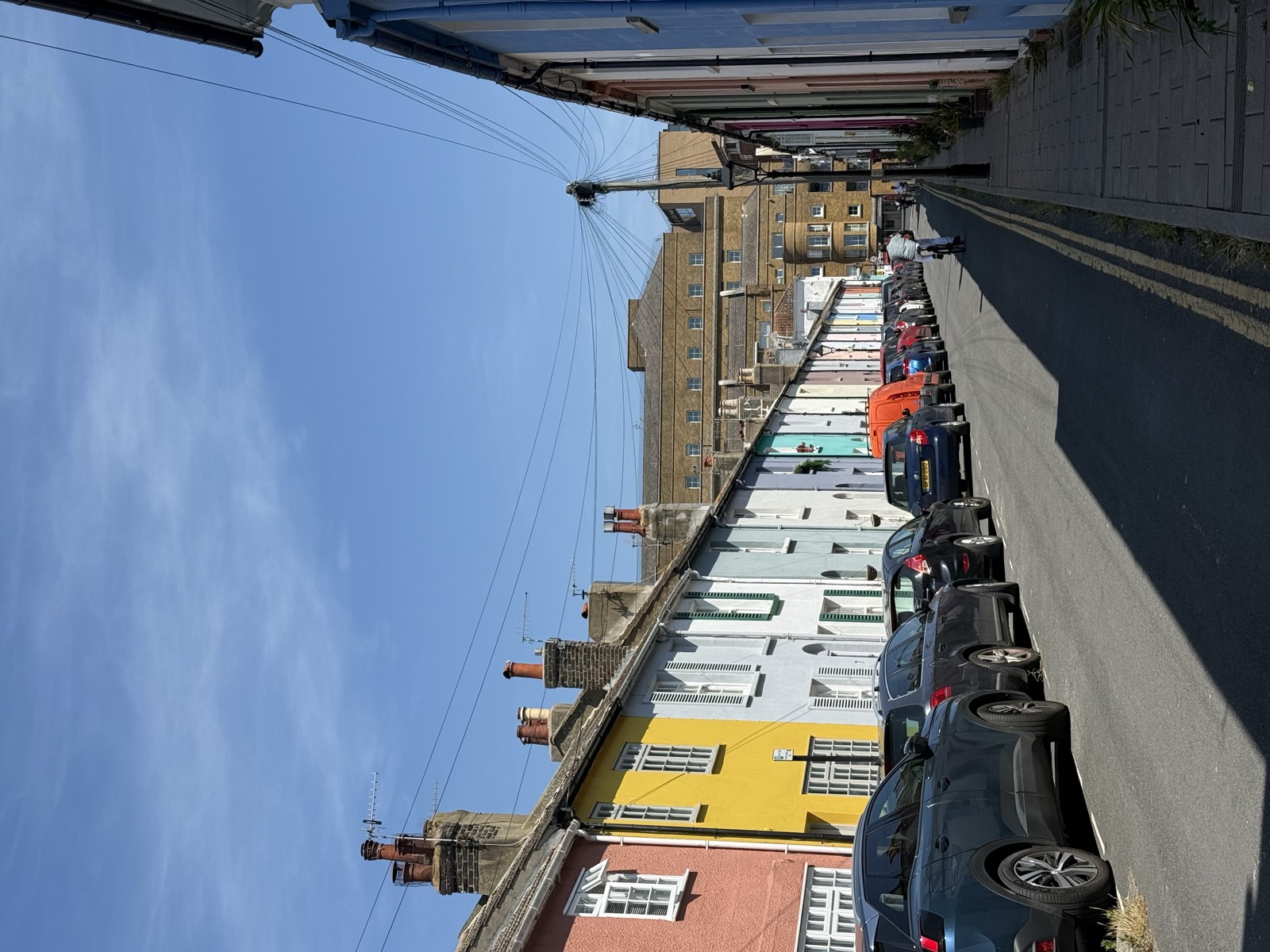
They sound almost identical and sit minutes apart, but they are different places. The Lanes are the narrow, twisting old-town alleys near the seafront, heavy on jewellers, antiques and pubs. North Laine is a wider, straighter grid of streets further inland, known for bohemian independent shops, vintage stores, street food and a louder, younger feel.
This is the single most common mix-up in Brighton, and the spelling does not help: "Lanes" with an -e for the old alleys, "Laine" for the northern quarter, a word tied to the old open-field system that once ran across the land here. The practical difference is easy to hold onto once you have walked both. The Lanes are tight, historic and polished, weighted towards jewellery and antiques. North Laine is broad and scruffy in the best way, full of record shops, vintage clothes, tattoo studios and cafe tables spilling across the pavement.
| The Lanes | North Laine | |
|---|---|---|
| Character | Historic old town, narrow twisting alleys | Bohemian grid of wider streets |
| Known for | Jewellers, antiques, old pubs, cafes | Vintage, records, street food, indie shops |
| Feel | Tight, polished, quieter corners | Louder, younger, busier |
| Where | Near the seafront, south of North Street | Further inland, towards the station |
If you have an afternoon, do both back to back: start in The Lanes near the sea, cross North Street, and wander up into North Laine as the streets open out. The two together give you the fullest sense of what makes central Brighton tick.
Where Are The Lanes And How Do You Reach Them On The Bus?
The Lanes sit in central Brighton just back from the seafront, bounded roughly by North Street, East Street, Ship Street and the Pavilion gardens. The City Sightseeing open-top bus reaches them from Stop 7 at the Jubilee Clock Tower, a few minutes' walk downhill towards the sea, and Stop 8 by the Royal Pavilion is also close.
The Lanes are compact and central, which is why almost any route through town passes near them. Coming off the open-top bus at the Clock Tower (Stop 7), you walk down towards the sea and into the top of the alleys within a few minutes. The bus links the quarter to the pier, the Pavilion at Stop 8 and Hove on one loop, so The Lanes slot neatly into a wider day. You check live availability & prices on Viator before you set off, and the ticket also covers unlimited city buses that day.
| Where | Central Brighton, just back from the seafront near the Royal Pavilion |
|---|---|
| Nearest bus stops | Stop 7, Jubilee Clock Tower; Stop 8, Brighton Pavilion, both a short walk |
| Known for | Jewellers, antiques, cafes and historic pubs in narrow twittens |
| Not to be confused with | North Laine, the wider bohemian streets further inland |
| Time to allow | An hour to browse, longer with lunch or a pub stop |
| Cost | Free to wander; spend as much or as little as you like |
What Is There To Do In The Lanes?
Browse the jewellers and antique shops, drink in one of the historic pubs, and eat somewhere tucked down a side alley. The main pleasure is unstructured: wander the twittens, follow whatever window catches your eye, and let the tight streets do the work. It is free to explore, and a good hour or two on foot.
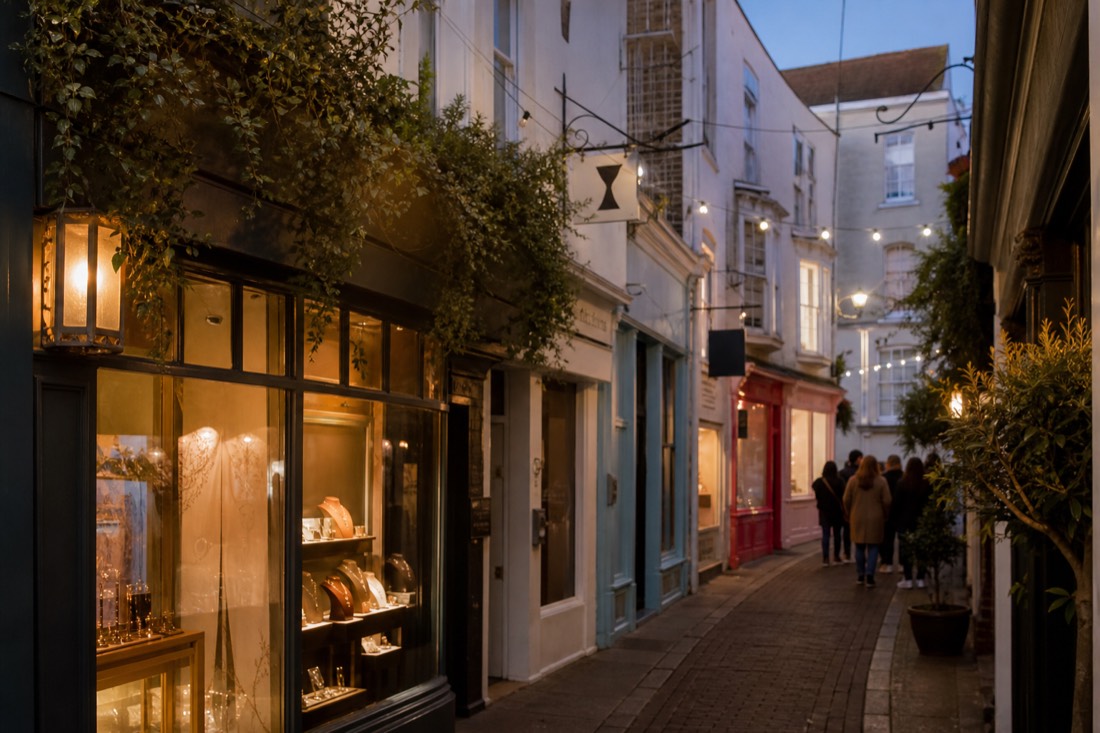
Treat it as slow wandering rather than a checklist. The jewellery windows are worth a look even if you are not buying, and several dealers here specialise in genuinely old pieces. Cross into the small squares and you find the pubs, some claiming centuries of trade, low-ceilinged and busy on a Friday. For food, the area runs from quick coffee and cake to proper sit-down dinners, often in spaces so small you would miss them without looking up. If you'd rather have the history pointed out than piece it together yourself, the small-group Brighton Story walking tour of the old town is a separate booking from the bus, and you can check the tour and its dates here.
Because The Lanes sit so close to the town's other central sights, they rarely fill a day on their own. That is a feature, not a flaw: pair them with the Royal Pavilion a couple of minutes away, the pier at the seafront, and North Laine over North Street. If you are seeing several of these, the open-top loop is the easy way to link them, and the things to do hub maps how the central stops connect. For history on the quarter, the Wikipedia entry on The Lanes is a solid primer, and the official Visit Brighton site lists current shops and events.
Common Questions About The Lanes In Brighton
What is the difference between The Lanes and North Laine?
The Lanes are the narrow, twisting old-town alleys near the seafront, known for jewellers, antiques and pubs. North Laine is the wider, straighter quarter further inland, known for vintage shops, records and street food. Different spellings, different areas, a few minutes apart.
What are twittens?
Twitten is a Sussex word for a narrow footpath or alley running between walls, hedges or buildings. The tightest passages in The Lanes are twittens, and squeezing through them is a large part of the area's charm.
How do you get to The Lanes from the bus tour?
Hop off the open-top bus at Stop 7, the Jubilee Clock Tower, and walk a few minutes downhill towards the sea. Stop 8 by the Royal Pavilion is also close. The Lanes are central and easy to reach on foot from either stop.
Is it worth visiting The Lanes?
Yes, for the atmosphere as much as the shopping. The narrow historic alleys, jewellers and old pubs are unlike anywhere else in Brighton, and it is free to wander. Allow an hour or two, and pair it with the Pavilion and pier nearby.
Are The Lanes good for shopping?
They are, particularly for jewellery, antiques and independent one-off finds rather than high-street chains. For vintage clothes, records and quirkier independents, cross into North Laine, which sits just to the north across North Street.
How long do you need in The Lanes?
An hour is enough to wander the main alleys and browse. Add time for lunch or a pub stop and you can easily spend half an afternoon, especially if you combine it with North Laine and the Royal Pavilion close by.
Plan Your Next Step
Have a travel date in mind? Check the current schedule for explore on foot with a guide before you lock in the rest of your Brighton plan.
Choose What Fits Your Visit
- The Brighton story - walking tour: about 1 hour 30 minutes central Brighton meeting point shown at booking English local guided walk, Royal Pavilion, Old Town, beach and North Laine route outdoor walking required
- Brighton City Highlights Walking Tour: 1.5 hours outside Royal Pavilion Shop English live guide professional guided walk, central districts and hidden places outdoor route; prepare for changing weather
- Brighton Royal Pavilion Admission Ticket: valid 1 day Royal Pavilion Garden entrance self-guided visit; language support not asserted one-day Royal Pavilion admission no passenger lift, mobility scooters and non-folding wheelchairs not allowed, under 14s require an accompanying person over 16
Scheduled dates from Viator load automatically. Availability and final price are confirmed on Viator.